
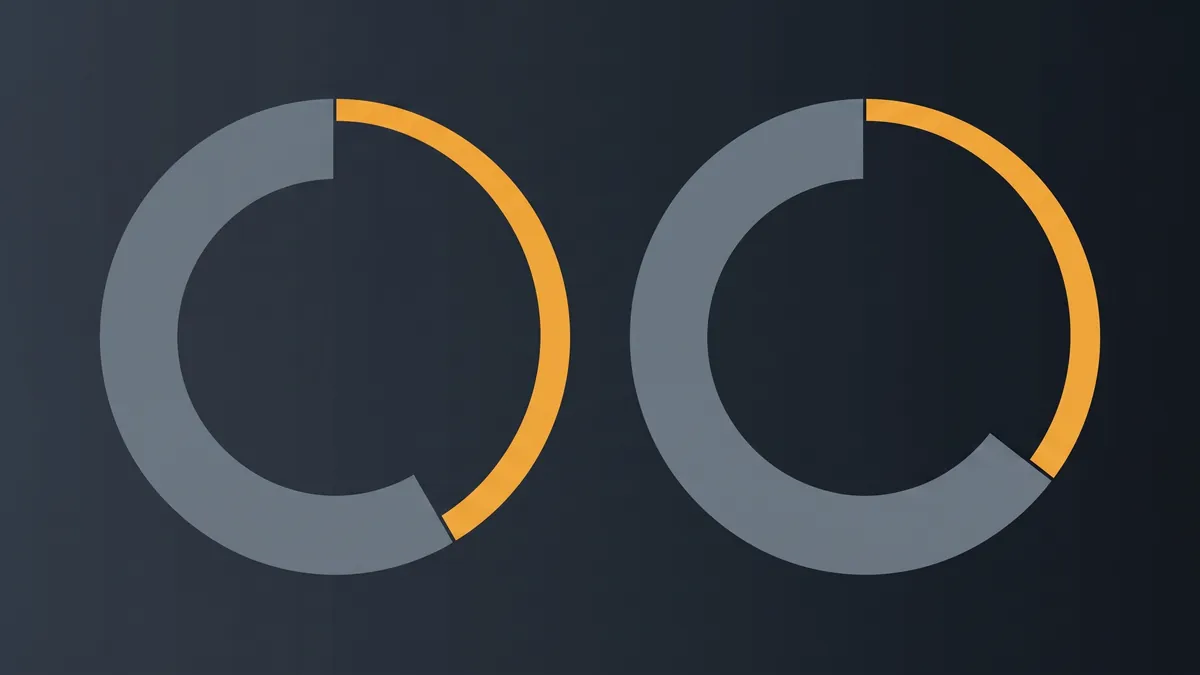
Return to Player, or RTP, is the percentage of all wagered money a slot returns to players over millions of spins. A 96% RTP slot returns £96 for every £100 staked across its full cycle — not across your session.
What most players do not know is that the same slot can ship with several different RTP settings. Studios such as Pragmatic Play, Play'n GO and Red Tiger release games in multiple configurations — commonly 96.5%, 94%, and sometimes as low as 88% — and the operator chooses which one to run.
Why UKGC rules changed slot maths
Since 2021 the UK Gambling Commission has banned autoplay, removed turbo spin, forced a minimum 2.5 second spin cycle, banned bonus-buy features and capped online slot stakes at £2. None of these change RTP directly, but they change how quickly you cycle through it.
Offshore sites have none of these restrictions. That is the real difference — not the RTP number itself, but the speed and stake at which you reach it.
How to check the RTP before you play
Open the game, click the information or paytable icon, and scroll to the last screen. The RTP is stated there — it comes from the game build, not the casino, so it is the one number an operator cannot quietly edit.
- Shows the studio's headline figure (usually 96%+) — the site runs the standard build.
- Shows 94% or lower on a game normally rated 96% — the operator picked a reduced configuration.
- Shows nothing at all — treat that as a warning sign.
Does higher RTP mean you win more?
Over a session, no. RTP is a long-run average and variance dominates anything you will personally experience. What it does change is the expected cost of playing over time — a 94% game costs three times as much per £100 staked as a 98% game.
How RTP is actually calculated
RTP is not measured; it is derived. A studio designs a paytable, assigns probabilities to every symbol on every reel position, and computes the expected return mathematically. A testing house — GLI, eCOGRA or iTech Labs — then verifies the arithmetic and runs a simulation of typically ten million to a billion spins to confirm the theoretical figure matches observed behaviour.
This matters because it means RTP is a property of the game's configuration file, not a policy an operator applies. A casino cannot make a game pay 90% on Tuesday and 96% on Wednesday. What it can do is load a different certified configuration — which is a different thing, and the distinction is the whole point of this article.
Why studios ship multiple builds at all
Different markets have different economics. A regulated market with high taxes and expensive compliance costs the operator more per player, so studios offer lower-RTP builds that give those operators a workable margin. Markets with lower costs get the higher builds.
There is nothing secret about it — the builds are published in studio documentation and certified individually. What is not published, on offshore sites, is which one that particular casino has licensed.
| Studio | Common builds | Notes |
|---|---|---|
| Pragmatic Play | 96.5% / 95.5% / 94.5% | Most titles ship in all three |
| Play'n GO | 96.2% / 94.2% / 91.2% | The lowest build is a substantial drop |
| NetEnt | 96.1% / 94.3% | Starburst and Gonzo's Quest both affected |
| Red Tiger | 95.7% / 94.2% / 92.5% | Wide spread across the range |
| Nolimit City | 96.0% / 94.0% | Extreme volatility on both |
The cost difference, in money
Percentages are abstract, so here it is in pounds. Turnover of £10,000 — which sounds enormous but is only 5,000 spins at £2, or a few evenings for a regular player:
| RTP build | Expected return | Expected cost | Difference vs 96.5% |
|---|---|---|---|
| 96.5% | £9,650 | £350 | — |
| 95.5% | £9,550 | £450 | +£100 |
| 94.5% | £9,450 | £550 | +£200 |
| 91.2% | £9,120 | £880 | +£530 |
Same artwork, same features, same symbols. The difference between the best and worst build on that turnover is £530 — for a game the player experiences as identical.
Reading a paytable properly
- Open the game — in demo mode if you have not deposited.
- Find the information icon. It is usually a small i, three horizontal lines, or a question mark, in a corner of the interface.
- Page through to the last screen. RTP is almost always on the final page, below the rules.
- Look for wording like "the theoretical return to player is 96.5%". Some studios list several figures for different bet types or feature states — take the base game one.
- If a bonus buy is available, check whether it lists a separate RTP. It frequently differs from the base game and is frequently lower.
If no RTP is displayed anywhere, that is information in itself. UK-licensed sites are obliged to show it. An offshore site that hides it has made a choice, and it is not a choice made in your favour.
What RTP does not tell you
Three things, and all of them matter.
It says nothing about your session. RTP is a long-run average across millions of spins. Across a few hundred, variance dominates completely and the figure is close to meaningless as a prediction.
It says nothing about volatility. A 96% low-volatility slot and a 96% extreme-volatility slot return the same over the cycle and behave nothing alike. You need both numbers. Volatility guide →
It says nothing about the feature split. Two games at the same RTP can allocate returns very differently — one paying steadily in the base game, another paying almost everything inside the bonus round. The second will feel far worse to play even though the maths is identical.
The practical rule
Check it once per game, per casino. It takes ten seconds and it is the only casino statistic you can verify yourself before risking anything. Everything else on an offshore site is a claim; this is a reading.
RTP across game types
Slots sit at the expensive end of the casino. Knowing where a game falls against the alternatives is the fastest way to understand what a session actually costs.
| Game | Typical RTP | House edge | Cost per £100 staked |
|---|---|---|---|
| Blackjack (basic strategy) | 99.5% | 0.5% | 50p |
| French roulette (even money) | 98.65% | 1.35% | £1.35 |
| European roulette | 97.30% | 2.70% | £2.70 |
| Video poker (optimal) | 96–99.5% | 0.5–4% | 50p–£4 |
| Slots | 94–96.5% | 3.5–6% | £3.50–£6 |
| Scratch cards | 90–96% | 4–10% | £4–£10 |
| Side bets | 88–97% | 3–12% | £3–£12 |
A slot at 94.5% costs roughly eleven times more per pound wagered than blackjack played correctly. That is not an argument against slots — it is an argument for knowing the number before you decide how much to stake.
The myths worth dismissing
"The slot is due"
Slots have no memory. Each spin is an independent event generated fresh, and a game that has paid nothing for 300 spins has exactly the same probability on spin 301 as it did on spin one. RTP is an average over the long run, not a debt the game accumulates.
"Playing at night is better"
The RNG does not know the time. Player numbers change through the day, which is why jackpots hit more often in the evening — more spins, not better odds.
"Bigger stakes have better RTP"
False on slots. Stake size does not alter the return percentage; it alters the size of the outcomes. It is true on some video poker and progressive jackpot games where a maximum bet is required to qualify for the top prize, which is a different mechanism entirely.
"Casinos loosen games for new players"
They cannot. The build is certified and applies to every player on that operator. What operators do instead is offer bonuses, which is the legitimate version of the same idea.
If you joined GamStop because gambling was becoming a problem, this page is not for you. GamStop exists because it works. Free, confidential help is available from GamCare on 0808 8020 133, and from BeGambleAware.